
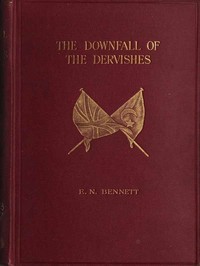
The Downfall of the Dervishes; or, The Avenging of Gordon by Sir E. N. Bennett
Sir Ernest Nathaniel Bennett wasn't just an author; he was in the thick of it. In 1898, he traveled to Sudan as a journalist embedded with General Kitchener's Anglo-Egyptian army. Their mission: to defeat the Mahdist State, a powerful Islamic revivalist empire, and retake Khartoum. The memory of General Charles Gordon's death there in 1885 still hung heavily over British military pride, and this campaign was framed as its long-awaited reckoning.
The Story
Bennett takes us step-by-step on the march south. We feel the punishing desert heat and the tension building as the massive Dervish army, followers of the Mahdi, gathers. The climax is the Battle of Omdurman itself, a one-sided technological slaughter. Bennett describes the disciplined British squares holding against cavalry charges, the relentless machine-gun fire, and the final, desperate attacks. He then follows the troops into the captured city of Omdurman. The book doesn't end with the battle, though. It shows the immediate, often messy, aftermath of victory.
Why You Should Read It
What makes this book stick with you is Bennett's dual perspective. He's a patriot reporting a triumph, but he's also a clear-eyed observer. He doesn't hide the horrific sight of thousands of Mahdist wounded left on the field. He questions the need for certain actions after the fight was won. You get the sense of a man caught between duty and conscience. He admires the courage on both sides, which is rare for accounts of this era. Reading it today, you're not just getting a battle report; you're getting a primary source that shows how empire was lived and justified by the people carrying it out, flaws and all.
Final Verdict
This isn't a light adventure novel. It's for readers who love real, gritty history from someone who was there. If you're interested in Victorian military history, colonial Africa, or the complex morality of empire, Bennett's account is essential and gripping. It's also perfect for anyone who enjoys war journalism, as it's a masterclass in early embedded reporting. Just be ready for an unvarnished, sometimes uncomfortable, view from the ground.
No rights are reserved for this publication. It is now common property for all to enjoy.








Kevin Wilson
8 months agoFrom the very first page, it challenges the reader's perspective in an intellectual way. One of the best books I've read this year.