
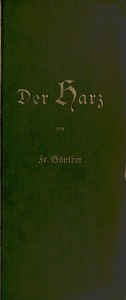
Der Harz by Friedrich Günther
Let's be clear from the start: 'Der Harz' is not a novel. If you're looking for a plot with a hero and a villain, you won't find it here. Published in 1889, it's a detailed portrait of Germany's Harz Mountains, written by Friedrich Günther. But calling it a simple travel guide would be a massive mistake.
The Story
There isn't a traditional narrative. Instead, Günther acts as your guide on a sprawling tour. He methodically describes the region's geography, towns like Wernigerode and Goslar, its dense forests, and the Brocken peak. But the 'story' he's really telling is the history soaked into the soil. As he describes a tranquil valley, he'll suddenly shift to recounting the harsh life of medieval miners who worked there. A description of a quaint town square becomes a gateway to discussing political upheavals or public executions. The book builds a powerful contrast between the serene, romantic beauty of the natural world and the relentless, often grim, human drama that has unfolded within it for centuries.
Why You Should Read It
This book got under my skin. Günther's writing is precise and factual, but that somehow makes the historical episodes he unearths feel more chilling. He doesn't sensationalize; he just reports. Reading it, you get this eerie sense of layers. You're seeing the picturesque Harz that a 19th-century tourist would see, but Günther is constantly pulling back the curtain to show you what was there before. It's about memory and place. It asks: what happened here, and does the land remember? The book is a quiet powerhouse of atmosphere. It made me look at my own surroundings differently, wondering what stories are hidden in plain sight.
Final Verdict
This is a niche book, but a fascinating one. It's perfect for readers who love atmospheric non-fiction, local history, or Gothic vibes without the supernatural fluff. Think of it as the literary ancestor to those dark academic podcasts that explore folklore and true history. You need some patience for the old-fashioned, detailed prose, but if you give yourself over to its rhythm, 'Der Harz' offers a uniquely haunting and thoughtful journey. It's less about the destination and more about the weight of the past you carry with you on the walk.
Legal analysis indicates this work is in the public domain. You can copy, modify, and distribute it freely.


Mary Clark
1 year agoAfter hearing about this author multiple times, the arguments are well-supported by credible references. I learned so much from this.